Sunday, May 6, 2012

The Bio and Style of Director, James Cameron (Jeff Good's Final Project)


One of the most successful and influential directors of our generation has a name that is all too familiar.  His epic movies have broken box-office records on multiple occasions and have quickly become modern classics.  Behind the guns, robots, aliens and sinking ships lies a success story of a director whose brilliant style has propelled him to the top of the movie-making industry.  Director, James Cameron and his unique film-making style has shaped today’s popular culture, the way we watch movies, and the science fiction genre itself.
James Francis Cameron was born in 1954 in Ontario, Canada.  He moved to the United States and majored in physics at California State University.  After graduation, Cameron began his professional career as a professional truck driver.  His luck changed when the truck driver realized that his imagination and ideas rivaled some of his favorite movies like Stanley Kubrick’s 2001: A Space Odyssey (1968) and George Lucas’ Star Wars: A New Hope (1977).  Quickly changing his career path and using his creative imagination as his primary tool, Cameron landed a job as a Hollywood art director and miniature set builder.  With this new career foundation, his big ideas and inspiring imagination allowed him to scramble to the top of the food chain.
After creating some of the art designs for Roger Corman’s Battle Beyond the Stars (1980), Cameron claims to have gotten his big break when some big time producers noticed his skill for directing.  Cameron was directing pick up shots for Bruce Clark’s Galaxy of Terror (1981) as a 2nd unit director.  He was assigned to shoot a scene showing maggots feasting on the flesh of a dismembered arm.  Using his ingenuity, Cameron rigged the prop to an AC power cord and electrocuted the maggots to make them writhe in a disgusting manner.  Seeing his strict, demanding, perfectionist directing style, larger project movie producers quickly talked with him about doing larger scale productions.  That same year, Cameron directed his first movie, Piranha Part II:  The Spawning (1981).  The movie may have been a flop, but it was the first step to becoming one of the most famous directors in all of Hollywood. 
In 1984, Cameron wrote and directed his magnum opus film that would engrave his name in movie history.  The Terminator, starring Michael Biehn, Linda Hamilton, and of course, Arnold Schwarzenegger, grossed $78 million world-wide.  The Terminator was an example of how artistic directing and genius imagination could rattle audiences with a sense of fictitious truth.  His imaginative, captivating style allowed for his reputation, audience and success to grow.  His success lead to the science fiction classics that we know today such as Aliens (1986), The Abyss (1989), and Terminator 2: Judgment Day (1991).  Eventually, in 1990, with all of his accumulated success, Cameron formed his very own production company:  Lightstorm Entertainment.
James Cameron is now one of the most sought-after directors in all of Hollywood and continues to captivate audiences with his imagination.  His “190 million dollar chick flick,” extravaganza, Avatar in 2009 with $297 million   Always looking to spice up the screen, Cameron has made substantial investments into 3D technology, and has become, what Ronald Glover calls “The 3D Entrepreneur.”

James Cameron’s style of film-making and directing usually focuses around powerful imagination, captivating plot, and beautiful imagery.  Cameron specializes in the science fiction and genre but has experimented with comedy (True Lies (1994)) and drama (Titanic). His movies usually consist of strong female characters like Sarah Connor from T-2: Judgment Day and Ripley from Aliens.  Cameron favors actor and actresses and usually tends to put them into his movies more than once.  These actors and actresses include Arnold Schwarzenegger, Michael Biehn, Bill Paxton, and Sigourney Weaver.  As every individual has their own personality, Cameron’s movies have a distinct feel and flow usually associating it to his directing style. Cameron loves to shoot scenes in a deep blue hue, but loves close-ups even more.  His movies contain close-ups of wheels or feet crushing objects, close-ups of fights to make the audience feel claustrophobic and as one of the fighters, and close-ups of people during chases.
 On-set, James Cameron is known as “Iron Jim” because of his tough and demanding style, which includes a hot temper.  Off-set he is said to be very kind but still a perfectionist.  Cameron does not think of himself as a perfectionist, but instead a “rightest”, not settling anything for less than his best.  As a director, many patterns are consistent in his movies and include the video monitor perspective, where characters are seen through a camera and shown to another on a monitor.  In every film, a character screams “GO, GO, GO!”, and when he needs to intensify a scene, he loves to use slow motion.  When asked how he felt about his machine related themes in his movies, Cameron replied “I see our potential destruction and the potential salvation as human beings coming from technology and how we use it and how we master, and how we prevent it from mastering us.” The use of advanced machines, and the fight against them, has been a common theme in most of his movies.  Cameron, being a grease monkey, loves to work with a variety of machines.  His hobby has inspired many memorable scenes like The Terminator fight scenes, submersible battles, an AMP suit fight, and the stance against a queen alien in a power loader. 


Watch for these characteristics in the following montage of video clips from James Cameron movies


Cameron has been inspired by many directors including Steven Spielberg, Ridley Scott, George Lucas, and Stanley Kubrick.  Cameron also has a deep love for the ocean, and exploration.  Just last month, Cameron made the deepest dive to the marinas trench in a submersible. This deep sea realm has been the subject of many of his documentaries, like Ghosts of the Abyss (2003) and Aliens of the Deep (2005) to raise money for his bigger projects and share his passion for the ocean with his audiences.

James Cameron, through hard work and skill, clawed his way to the top of Hollywood.  Many of his movies have become modern classics and are loved by millions.  Most influential of all is Cameron’s unique and wonderful imagination, whisking audiences to planets beyond our solar system, or just below our oceans.  It is this power of imagination, and his style in which he presents it, that has made him one of the most successful and influential directors in history. 


“Film making is not about film; not about sprockets.  It’s about ideas.  It’s about images, it’s about imagination.  It’s about story telling.”
- James Cameron

Works Cited
Hansson, A. (2012).  James Cameron.  IMDB.   <www.imdb.com/name/nm0000116/bio>.
Glover, Ronald. (2012). “James Cameron: Hollywood’s 3D Entrepreneur” Reuters.  2 April, 2012. < http://www.reuters.com/article/2012/04/02/cameronidUSL2E8F200T20120402>.
James Cameron. (2012).  IMDB. < http://www.imdb.com/name/nm0000116/>.
James Cameron. (2012).  Wikipedia.  < http://en.wikipedia.org/wiki/James_Cameron>.

Citizen Kane Final


1.  Citizen Kane is the most influential movie ever made.  This can be explained by the many of receptions that this film made on the public and critics alike.  Like all movies, there is a negative and a positive side to criticism but, for most, Citizen Kane is a masterpiece because of its landmark acting, gripping story, and rebellious style.  Citizen Kane was the debut for many new actors from live theaters.  Their new-time rolls were flawless and contributed to the overall reception of the movie.  The performances of the actors reflected the emotions of the melodrama of scenes throughout the movie.  The humor, sadness and tension was almost life-like thanks to the actor’s skillful ability to play their characters, as well as their ability to play on the emotions of the other characters; this perfection influencing many other Hollywood actors’ performances to do the same. 
Parallel with the performance of the actors was the Citizen Kane’s gripping story.  Citizen Kane begins with a mystery to solve the meaning of Charles Kane’s final word, “rosebud.”  The film’s ability to grab the audience’s attention is an essential example of how to make a truly pure movie.  The plot of the story revolves around the quest for meaning of this word which sheds light on the many parts of Kane’s life.  Audiences are not only starved of the meaning of the word “rosebud,” but also are exposed to many realistic interpretations of personal life, love, media, drama, fame, and failure.  The successful effect of this story on audience has influenced many biographical films including David Lean’s Lawrence of Arabia (1962).
 Lastly, and most importantly, was Citizen Kane’s rebellious style that broke almost all Hollywood tradition.  Orson Welles’ ability to make each scene, each shot, and each camera angle of Citizen Kane unique to the movie making business led to its great success and reception with critics.  Welles’ gift for directing made the movie a joy to watch.  Every camera shot was unique and had a reason for its style.

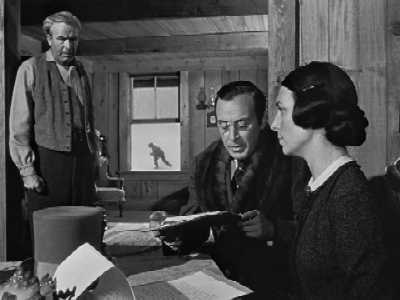
For example, this shot, the camera’s angle, and the scene’s lighting display the tension between the two characters and the feeling of inferiority.  It is also amazing, as seen from the picture below that Orson Welles was willing to do anything to get the shot that he desired. 
Shots and style like this were used in every scene, thanks to Welles’ perfect ingenuity.  This type of directing, scene structure, and camera style that has made Citizen Kane become one of the best movies ever made has also become the favorite of many modern-day directors like Steven Spielberg, Martin Scorsese, Ridley Scott, Francis F. Coppola, Brian de Palma, and the Coen Brothers who all claim to have been influenced by Citizen Kane and Orson Welles’ directing.

2.  Within Orson Welles’ first 23 years of career, he specialized in theater and some radio later giving rise to his complete creative control in Hollywood.  During the 1930’s, Welles was hired to direct and produce multiple productions for the Federal Theatre project and later went on to form the Mercury Theatre.  His productions included plays like Macbeth, Horse Eats Hat, The Tragical History of Doctor Faustus, and Julius Caesar.  The formation of the Mercury Theatre gave way to Welles’ acting career on radio as he stared in multiple broadcast including The Shadow, and the memorable and terrifying broadcast of H.G. Wells’ The War of the Worlds. Welles’, whose directing genius was noticed from these humble beginnings, was offered a contract by RKO Studio’s president George Schaefer offering him complete artistic control of two pictures.  The young Welles’ love for theatre lead to his youthful success in film.  His first movie, Citizen Kane starred most of the actors from the Mercury Theatre who worked for Orson Welles.  Never leaving his roots in live performance, Welles’ climbed the latters of Hollywood, and with his knack for the trade, became one of the best directors of all time.

3.  "A Marriage Just Like Any Other" http://www.youtube.com/watch?v=VTyOC8GF-qg

The scene in Citizen Kane where the aged Jedediah describes Kane’s first marriage with Emily is a beautiful example of the Welles’ directing genius in order to completely and effectively tell a story.  In order to show the degrading marriage and increasing tension between Mr. and Mrs. Kane, the elements of directing, writing, performance, art direction, editing, and score had to be perfect.  The beginning of the scene introduces the reporter interviewing Jedediah Leland who begins to describe the story of the newlyweds and their degradation over time via flashback.  The writing of this scene intrigues the audience with the sense of an outside look at a snippet of life of the famous Charles Kane.  Directing the two actors to move further and further away as the marriage went on showed the continuing build-up of tension among the two lovers. 
Orson Welles’ and Ruth Warrick’s performance truly made the scene like a “marriage just like any other.”  At first they showed affectionate love toward each other and were interested in each other’s lives.  However, as the scene progressed, the actors began to show more and more tension between each other, as they began to become shorter in tone, and eventually stopped talking all together.  This increasing stress made this sequence truly a realistic scenario and quite detrimental to the film’s tone.  Within the scene itself, with regards to art direction, the apparent tension between the two increases with the less and less flowers placed in the scene and the darker and darker clothing that Charles Kane wears.  To parallel these elements, the editing style of cutting to points in the couple’s life by use of the spinning camera and short quick shots of each other’s facial expressions were used.  Lastly, if the scene wasn’t already stressful enough, the score slowly became more dark and angry just like the marriage.  This small scene was only an example of the perfectionist, artistic style that Welles’ possessed and displayed throughout the movie.  His use of many of the elements of film made each and every scene, like the one described, beautiful, flawless, and an accurate account of life of a failing success.

Saturday, May 5, 2012

FINAL EXAM


1)   “Citizen Kane” is one of the most influential films ever made.  Discuss this statement.

2)  What had Orson Welles done in his first 23 years of life to warrant the Hollywood Film Industry offering complete creative control to a first time filmmaker?

3)  Pick an extended scene or sequence from “Citizen Kane” and discuss the storytelling technique by analyzing any combination of its component parts (direction, writing, performance, cinematography, production design, art direction, editing, sound, score, etc.).

EXTRA CREDIT:  Watch Welles’s “Touch of Evil” and write an analysis.

NOTE:  The movie career of Orson Welles was marked by a troubled relationship with mainstream Hollywood.  Aspects of this could be discussed in question #2 and the Extra Credit proposition.

You may submit this in printed form during our last class session or post it to the class blog by that date.  Pictures and clips can be included.

Wednesday, May 2, 2012

Sex in American Cinema Final Project

 The media can be an instrument of change, maintain the status quo, and shape individual beliefs and cultural norms. In addition, the media is created by specific cultures, and reflects those cultures. Watching movies is a favorite American past time. As for the representation of sex, its depiction in films has changed drastically since its origins in American film. The addition of more sexually explicit content constructs a portrait of reality. The development of sex and nudity in American film reflects society, its beliefs, values, attitudes, and behaviors. As American values changed, the images of society presented by the media changed. This project will explore sexual representations and their regulation in American cinema from the industry’s early years to the present day.

 Adolescence was invented in the early 1900s, in which adolescents were identified as neither children nor adults. So, adolescence was considered to be a sexually tempestuous stage in life, and adults wanted to control adolescent sexuality (Sex and Society). Motion pictures had the potential to construct stories and show images that some Americans found immoral. It was during a period or urbanization and modernization. People were concerned about sex hygiene, issues of birth control, pre-marital sex and the divorce rate. Conservative Protestants believed that the exposure to sexual content would lead to a weakening of traditional sexual values. Therefore, a state obscenity law was created that put a limit on sexual expression in motion pictures. In 1915, the Supreme Court ruled film censorship constitutional. In addition, it determined that motion pictures were not protected under the 1st Amendment because they were “mere representations of events, of ideas and sentiments published and known, vivid, useful and entertaining no doubt” but also “capable of evil, having power for it, the greater because of their attractiveness and manner of exhibition.” Despite the 1st Amendment, filmmakers still showed nudity as well as the portrayal of vice and immorality (Pennington).

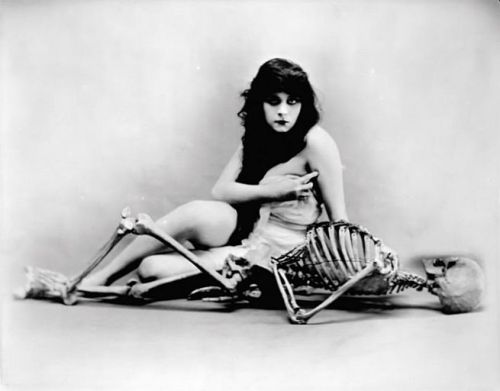
In the 1916 film, The Vixen, Theda Bara plays a nymphomaniac. She was risque and exotic. She became the first vamp.

Many Americans were offended and called for greater censorship.

 As a result, the largest companies in the industries formed The Motion Picture Producers and Distributors Association in 1922. Motion pictures attracted large audiences, especially among the poor and working class. The organization assumed responsibility for the moral standardization of popular films. William H. Hays was the first President. At first Hays tried to convince studios to adopt voluntary self-regulation. However, studios failed to meet Hays expectations, so he formed the Studio Relations Committee in 1927. Studios were prohibited from implying adultery, passionate acts such as excessive lustful kissing, lustful embraces, suggestive postures and gestures, seduction or rape, sex hygiene and venereal diseases, and childbirth (Doherty). The main objective was for a ban on sex in order to maintain the sanctity of marriage and the home.

Individuals born between 1925 and 1945 are considered to be a part of The Silent Generation. These individuals tended to have traditional values in relation to sex including views that teenage sex, pre-marital sex, and same-gender sex was wrong. The Silent Generation believed that sexual pleasure was a part of a happy marriage. Compliance with the code was a verbal agreement in which self censorship set boundaries for what could be seen, heard, and even implied on film. However, oversight was lax and producers did not pay attention to the Hays Code (Doherty). Filmmakers used important dialogue and images of clothing because, “nudity unseen was better than no nudity at all.” Elliptical editing would become Hollywood’s preferred technique for implying sex (Pennington). For example, In The Big Sleep, Humphrey Bogart plays a detective. He goes into a bookstore looking for information and begins flirting with the shop girl in a kind of innuendo laden dialogue. When it begins raining otside he offers her a drink, and says "I'd rather get wet in here." She pulls the curtains closed, locks the door, gets out two glasses, takes off her glasses, puts her hair down and the screen fades to black. When the screen fades up it is nighttime. Without explicity showing a sex scene, the filmmakers were still able to imply that it happened.
Filmmakers found loopholes in the code.  They were able to embed sex in stories in which sex had a minor thematic role, but a significant screen presence. Hays faced pressure.

 In 1934, American Cinema changed. Hays wanted to put a more respectable face on the motion picture industry. He changed the Studio Relations Committee to the Production Code Administration. Joseph I. Breen became its head and one of the most influential figures in American Cinema (Pennington). “More than any single individual, he shaped the moral stature of the American Picture.” Breen presided over and upheld the moral universe of Classic Hollywood cinema. “He wanted to remake American cinema into a positive force for good, to imbue it with a transcendent sense of virtue and order.” Film censorship got stricter in detecting what was visually and verbally forbidden. (Doherty). The Production Code Administration began to “regulate, systematically and scrupulously the content of Hollywood motion pictures.” In addition, a single corporate entity, the Hollywood Studio System, produced, distributed, and exhibited the film products. Breen required that every producer submit their screenplays to the PCA board for a seal of a approval before beginning production or distributing the film. Images that were forbidden were cut. Dialogue that was explicit was overdubbed or deleted. The PCA could fine any member that did not comply (Pennington).


Under the code, an image not even depicted on screen, but merely planted in the spectators mind was considered dangerous. Appendix 1 of the code stated, “The presentation of scenes, episodes, plots, etc. which one deliberately meant to excite manifestations of sex and passion on the part of the audience is always wrong.” Therefore, according to the code subject matter relating to sex must not be shown unless absolutely essential to the plot because they cannot be presented without arousing dangerous emotion on the part of the immature and the young. The code was divided into two parts: the first stating its moral vision, and second outlining the forbidden material. (Doherty). The Code sought to establish and maintain a moral universe with visual ethical guidelines. It was believed that the lack of morality in motion pictures had the potential for social damage.


In 1943, the PCA condemned Jane Russell’s cleavage in, The Outlaw.
Hughes had considerable trouble getting it approved by PCA due to its heavy emphasis on and prominent display of Russell's breasts. The PCA strictly enforced its rules about what actors and actresses could and could not do on screen. For example, lip-on-lip action was scandalous. So, filmmakers had to avoid excessive passion. The lips could only touch for 3 seconds at a time. Alfred Hitchcock’s, Notorious, has the most epic kiss in movie history. Notorious has the first romantic scene in film. The two main characters get around the code by kissing for 3 seconds, but they do it over a period of 3 minutes.

Conservative sexual norms prevailed in popular films until the mid-1940s.


The Baby Boomers are the individuals born between 1946 and 1962. Unlike The Silent Generation, The Baby Boomers did not think that sex should be reserved for marriage only. Their only standard was that two people be in a loving relationship (Sex and Society). In 1948, producers caught a break when the Supreme Court provided Motion Pictures protection under the 1st Amendment. This created a legal opening for which nudity and sex could gradually enter mainstream. The reduced threat gave filmmakers less reason to comply with the code. In the mid 1950s, cracks in the code appeared. Hollywood under the code was fraught with defiance (Doherty). In the 1950s, television quickly took over Hollywood’s position as the largest provider of entertainment in the U.S. So, studios began to challenge the code more directly in order to differentiate motion pictures from television.

In the 1960s the code crumbled. In 1961, the ban against homosexuality and other non-normative sexual behaviors was dropped. Between 1963 and 1981, the young adults’ of Generation X had attitudes and lifestyles focused more on pleasure and casual sex (Sex and Society). A ratings system replaced the Production Code in 1968. The categories classified films as acceptable for adults or for adults and adolescents. A was morally unobjectionable, B was morally objectionable in part, C was condemned. As the 60s was winding down there was no production code left. Studios were able to enjoy more freedom of expression (Pennington). Film represented the counter-culture attitudes of anti-establishment, sex, drugs, and rock ‘n’ roll. A Clockwork Orange, 1971, features disturbing sexual and, violent images including rape torture and murder. The youth gang breaks into a house, beats a man and makes him watch as they strip his wife of her clothes. The rest is left to the audience to figure out.
In the 1970s, there was a liberal realignment in sexual behavior patterns in the U.S.

Generation Y, those individuals born between 1982 and 2001, have the most permissive attitudes toward sex. These individuals have sex at a younger age, approve of casual sex, oral sex, pornography, masturbation and homosexuality. Generation Y believes that if two people want to have sex than sex is acceptable (Sex and Society). In 2009, the film, Precious, released to theaters. The movie follows a story about a 16-year-old girl who is abused by her mother and raped and impregnated by her father twice. Precious is rated R.

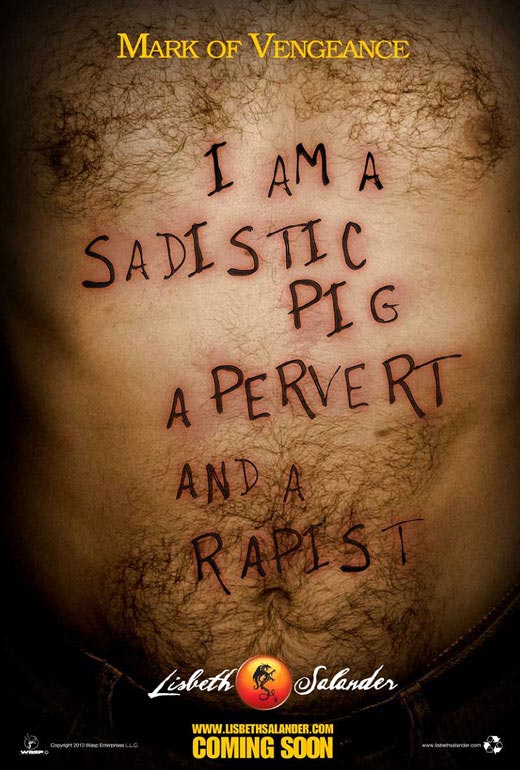
The generations of the 20th century differ greatly in their attitudes about sex, and sexuality than those of the previous generations. Today there is explicit representation of sex and violence in films. To date, I cannot say there is another movie that explores the development of sex in film than does, The Girl with the Dragon Tattoo, 2010. The Girl with the Dragon Tattoo does not have a rating. There are graphic scenes of sexual assault, and nudity. As well as, brutally violent content including rape, and torture. In addition, the main character uses a taser gun on her rapist, shoves an object up his anus, and carves a tattoo into his chest which reads, “I am a sadistic pig, a pervert, and a rapist.”


 Personally when I saw the rape scene in the film, I almost left the theater. I was shocked, and uncomfortable. It was not something I was expecting to see. It was not something I felt like I should be sitting and watching. My friend and I both contemplated leaving. We stayed because I think the scene although extremely disturbing is important to see. Media, such as films have a power. They can be an experience of learning about the world and human nature. Even if I or my friend or no one else in that audience has experienced such evil it is important that we can understand the horrors of the victims and the damage it inflicts on their lives. Lisabeth Salander, the main character is a survivor of sexual violence. So, she is a symbol of self determination in the face of adversity.

Sexual content has been depicted in film since the silent era, but no one could have imagined where it has come to. The transformation in censorship laws and changes in obscenity laws has allowed for a greater presence of sex in American film. Hollywood’s depiction of sex has changed over the course of a century and exposes the changing sexual values and behavior patterns in American society. The industry parallels the changes in American’s sex lives. People like sex. Sex sells. So, where do we go from here?

 Sex and Society. Vol. 2. New York: Marshall Cavendish, 2010. Googlebooks.

 Doherty, Thomas Patrick. Pre-code Hollywood: Sex, Immorality, and Insurrection in American Cinema, 1930-1934. New York: Columbia UP, 1999. Googlebooks.

 Pennington, Jody W. The History of Sex in American Film. Westport, CT: Praeger, 2007. Googlebooks.

Take-Home Final Exam

  1. Citizen Kane is one of the most influential films ever made. Discuss this statement.

 After gaining Hollywood’s interest through his radio adaptation of, “The War of the Worlds” Welles received a rare opportunity. He signed a contract to, for the first time, write, direct, produce, edit, and star in a film for the RKO Studios. This kind of contract was remarkable because during the time major studios controlled every aspect of their product. However, Welles was given an unprecedented amount of artistic control over the project from start to finish. RKO allowed him the freedom to develop his own story and to cast his own actors and crew members, and was given the final cut. In addition, his budget was $500,000 which was a significant amount for an unproven filmmaker. At only twenty-five years of age, Welles was considered to be a theatrical genius. By contrast, there were plenty of people in Hollywood who hoped he would fail. Welles made no secret of his disdain for so-called "movie people." Also, many resented the fact that as young and inexperienced he had been given so much creative license. Despite their lack of support, Citizen Kane was released in 1941 only to face further controversy. When William Randolph Hearst, a leading newspaper publisher realized that the film was a brutal attack on himself he set out to use all his influence to discredit Welles and to stop the film. Although Hearst was largely successful he was unable to prevent the recognition of one of cinema’s great masterpieces.


Orson Welles in many ways revolutionized the medium of cinema. The film broke new ground in areas such as deep focus, complex sound, and narrative structure. The story has a fantastic script, and an overwhelming performance by Welles as Kane. The film’s framed use of “deep focus” cinematography allowed for both small objects and a whole background scene to be seen simultaneously. Welles’s use of flashback within the story added to its masterful directional style. Throughout the film, both the film’s reporters and the audience attempt and yearn to uncover the real Kane, but Kane remains an enigma. It was a film by Orson Welles. It was a product of its director, not its studio. Orson Welles can be considered an auteur because his film reflects his personal creative vision. His creative voice was distinct enough to shine without any studio interference. It is an artistically important movie highlighting what can be produced when you are given artistic freedom.

 Citizen Kane is the most influential film ever made because it defied the odds. Orson Welles was given an opportunity he could not refuse. It was the first film he would co-write, produce and act in. He had free reign. He faced criticism and personal attacks. He tried new ways of filming. However, I think that Citizen Kane remains so influential is because of its timelessness. The narrative arc, featuring an idealistic young protagonist corrupted by money and power is relevant to modern audiences.


2. What had Orson Welles done in his 23 years to warrant the Hollywood film industry offering complete creative control to a first time filmmaker?

Before launching a successful film career in 1941, Orson Welles worked extensively in theater and was a popular radio entertainer. He founded The Mercury Theater and directed a number of high-profile theatrical productions, including an adaptation of Macbeth and The Cradle Will Rock. He became notable for his Broadway adaptation of Julius Caesar, Caesar in 1937. Welles’s Mercury Theater on the Air was a radio series that produced live radio dramas. The weekly, hour-long series starred Welles in adaptations of classic literature, including “Dracula,” and “The Count of Monte Cristo” However, the most infamous broadcast in the history of radio was H.G. Well’s story, “The War of the Worlds.” “The War of the Worlds” is a science fiction novel that details a conflict between mankind and an alien race as Martians invade Earth. The broadcast was performed during a Halloween episode series on October 30, 1938. It was presented as a series of news bulletins. Moreover, the show ran without commercial breaks in order to add to its realism. As a result, the broadcast essentially gave a startling “live” report of a Martian invasion. There was widespread panic and outrage by listeners who believed the events in the broadcast were real. Orson Welles’s performance captured the public’s imagination, but more importantly Hollywood’s interest. Welles found national and international fame.

3. Pick an extended scene or sequence from Citizen Kane and discuss the storytelling techniques by analyzing any combination of its component parts (direction, writing, performance, cinematography, production design, art directions, editing, sound, etc.)
 The story is told visually through interplay of light and dark. A lot can be understood about Kane and the progression of the plot through the use of light and dark. I understood the light to represent the innocence of childhood. The lightest part of the entire film is the first scene in which Kane is a child playing in the snow. He is happily riding down a snowy hill on his sled. After Kane is taken by Walter Parks Thatcher, the film and Kane’s life get progressively darker. The dark part of the film represents the corruption of power and money. Kane loses his friends, his wives, and he even loses himself. He loses everything that ever means anything to him.

The darkest scenes are the ones that show Kane’s “palace.” These scenes expose the depth of Kane's isolation and loneliness. The story follows a reporter’s quest to find out who Citizen Kane was. In one scene Kane tells Thatcher, “If I hadn’t been rich, I may have been a great man.” Thatcher replies, “What would you have liked to have been?” “Everything you hate,” says Kane. The irony of the story is that Kane became everything Thatcher was. Kane fell into the trap of selfishness and greed over the interests of the people. His wife Susan complained that her husband never gave her anything he ever cared about. However, I do believe that he did. The snow globe was found in her room. The real Citizen Kane was sitting on her shelf the entire time. Rose Bud was Citizen Kane’s childhood sled. It represented all Kane used to be, the light he once had in his life. The last scene when the sled is burned represents his defeat. In the end Kane is swallowed by darkness.


Some Interesting/Random Things

Okay, so a few things:

1. Bonnie and Clyde: One thing that I noticed while watching this movie is that you can see how the '60s had an impact on costume. The makeup and dress was a little different than I had expected. It also seemed to break many of the "rules" that we have been watching in the class. For example, there was a scene where Bonnie and Clyde were making out on the bed, and the final scene was bloody. This was very different from other films of the time and those that came before it. It made me wonder if this could be due to the counter culture that was emerging from the 1960s and 1970s.

2. Being John Malkovich: A very odd, but interesting movie, tells of a puppeteer who is played by John Cusack and his wife, played by Cameron Diaz, entering the mind of John Malkovich through a small door behind a filing cabinet. Although there are several twists and turns, in the end, Schwartz (Cusack) discovers that he can live in Malkovich's mind forever, and he turns Malkovich into a world-famous puppeteer. However, he decides to leave Malkovich's body when he attempts to get his love, Maxine back (the classic "I loved a girl, I lost the girl, I have to get the girl back"). However, he soon finds himself inside Maxine's baby, but at the same time Malkovich also plans to prolong his life through Emily (the baby). Odd movie it was.

3. I found this website while working on an assignment for another course. It might be helpful if anyone has vocab. questions.
Click Here

Tuesday, May 1, 2012

Bonnie and Clyde

Bonnie and Clyde is A 1967 American crime film directed by Arthur Penn. During the great depression Bonnie and Clyde meet when Clyde tries to steal Bonnie's mothers car. Bonnie finds what Clyde is doing is far more interfering that her waitress job and decides to join him as her partner in crime. Their crime spree boosts up when they meet CW Moss and Clyde's brother Buck and his wife Banche. At first the two women were having trouble getting along with each other. Bonnie and Clyde go from these smaller crimes to bank robberies and more violent actions. At one point CW messes up one of the robberies where things go south and Clyde shoots the bank manager in the face. The gang is then pursued by the Texas ranger which is not successful at the time. But then a raid later catches the outlaws off guard wounding Buck with a shot to the head and injuring Blanche. Bonnie and Clyde and CW escape but while the police have Blanche they trick her into giving them CW name. They come to find the outlaws in CW fathers home hiding. Althought they are still not caught a trap is later set where they are eventually caught when they stop to help fix a flat tire. I thought this movie was well written and also caught my attention by starting off with Clyde trying to steal the car.