Monday, March 12, 2018

V For Vendetta: A Review


"Remember, remember the fifth of November, the Gunpowder Treason and plot. I know of no reason why the Gunpowder Treason should ever be forgot."

This is the opening narration for the 2006 film V For Vendetta. V for Vendetta is a political thriller/adventure film that is set in the UK, but was written by American film directors, The Wachowskis. The Wachowskis are also known for: The Matrix series, Speed Racer, Cloud Atlas, Jupiter Ascending, and Sense8. The film had a runtime of 145 minutes and was produced through Warner Bros. Pictures. The plot of the film is set in a futuristic UK, the year 2027, where a corrupt and totalitarian government is in power. V, is an anarchist freedom fighter or vigilante who is working against the government in an attempt to ignite a revolution through acts of terrorism. V is played by actor Hugo Weaving. Evey, the female lead in the film, is a young woman who gets unintentionally involved in V's mission. 


As seen in the included pictures, V wears a mask with the face of Guy Fawkes, who tried to blow up the houses of parliament in 1605. Thus, it is only fitting that V wear the mask in this film. One striking detail, is that V’s face is never revealed throughout the entire plot. V for Vendetta follows V’s plan over a 12-month period until the night that he plans to land his final blow against the corrupt government.

The film is based on the 1988 graphic novel by authors Alan Moore and David Lloyd (also titled V For Vendetta). 


By December of 2006, ten months after its US release in March of the same year, V for Vendetta had already earned a total of $132,511,035 universally. Of this amount, $70,511,035 was from the United States box offices. The film was number one in countries such as, the Philippines, Singapore, South Korea Sweden, and Taiwan. General criticisms from the film were mixed. Rotten Tomatoes gave it a 73% on its ‘Tomatometer’ and it gained an ‘Audience Score’ of 90%.

V for Vendetta’s controversial story line brings forth several important issues, that are just as important now as well as when it was released in 2006. 


Issues such as: terrorism, homosexuality and homophobia, religion, and totalitarianism. These themes are constantly met throughout the duration of the film in unique and effective manners. However, there have been protests toward the film’s message in that it is ‘watered-down’ in favor of violence and special effects. This protect took effect the same year as the film’s release by the New York Metro Alliance of Anarchists. On the other hand, however, the film was praised for its depiction of the LGBTQ community.


What I believe deserves recognition is Hugo Weaving’s acting as V in the film. His masked face captivated audiences worldwide, but what I believe stood out is how he brought his role together by his body movements, mannerisms, and his velvet voice. When an actor’s face is hidden, it often withholds aspects of acting that the average audience member does not take into consideration. However, these aspects are what brings an acting performance together. The face holds emotions, reactions, and facial features that tie into the dialogue and help to ‘make’ a character. Weaving was left with other aspects to bring V together and it is my opinion that he pulls it off effortlessly.
k


Recommended Viewing - Film Noir - Weeks 9 & 10

Blade Runner

Blood Simple

Chinatown

Gun Crazy

L.A. Confidential

Laura

The Maltese Falcon

Nightcrawler

Nightmare Alley

Out of the Past

Sin City

Touch of Evil

Sunday, March 11, 2018


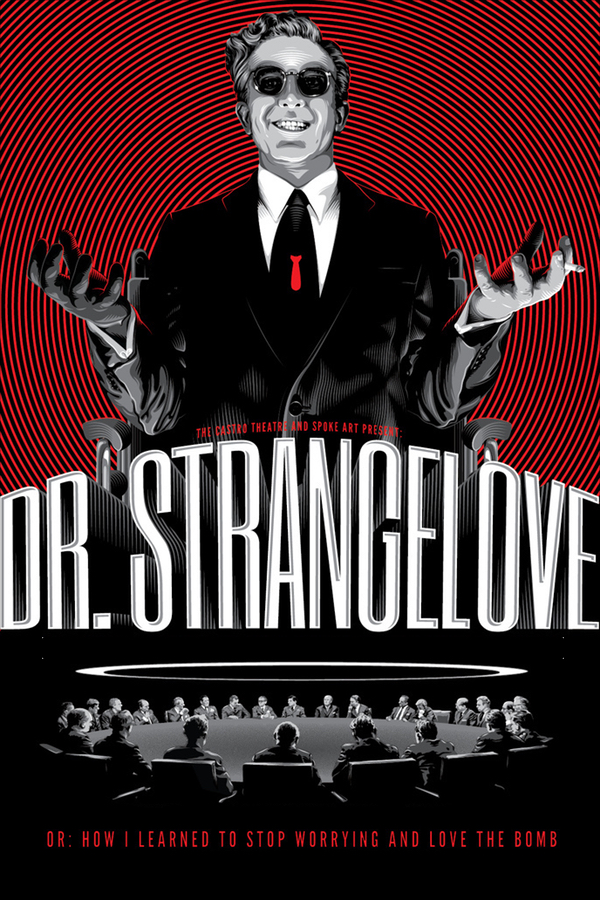
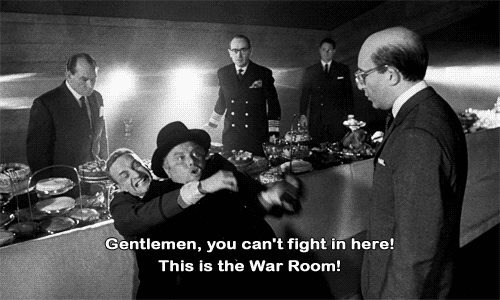
Dr. Strangelove or: How I Learned to Stop Worrying and Love the Bomb, more commonly known as Dr. Strangelove, is a 1964 political satire black comedy film that critiques the Cold War paranoia of a nuclear war between the Soviet Union and the United States. The film was directed, produced, and co-written by Stanley Kubrick, stars Peter Sellers and George C. Scott, and features Sterling Hayden, Keenan Wynn, and Slim Pickens. Production took place in the United Kingdom.

The story concerns an unhinged United States Air Force general who orders a first strike nuclear attack on the Soviet Union. It follows the President of the United States, his advisers, the Joint Chiefs of Staff, and a Royal Air Force (RAF) officer as they try to recall the bombers to prevent a nuclear apocalypse. It separately follows the crew of one B-52 bomber as they try to deliver their payload.


Having enjoyed 2001 Space Odyssey, and The Shining, I knew it was time to give this famous Stanley Kubrick film a shot. I feel that I had initially skipped it growing up because it was shot in black and white. Pair that with the fact that I’m not normally a fan of comedies and this becomes a fairly unusual film choice for me. That being said, I enjoyed this film immensely and would highly recommend it for it’s humor, wit, and novel style.

For a fifty plus year old film, the humor hardly seems aged at all. While it wasn’t a netflix stand up comedy hour, the movie was full of legitimately solid laughs and sharp one liners. There is no lack of wit in this film, and the delivery is on point. The subject matter of the satire, however, remains the meat of the story.

Released during the Cuban Missile Crisis and in the middle of the Cold War, this film had extreme political weight to it. The audience would have had to look past the very real and present danger of actual nuclear war to laugh at the film. There would have been a feeling of current and present fear on behalf of the viewer while watching this comedy, and that I find extremely interesting. The context in which this comedy took place is likely unlike any other before.


While the viewers watched, the USSR had it’s missiles trained at them and vice versa. With the slightest hitch, they could be obliterated in a fraction of a second. The film takes this situation and masterfully creates humor out of it. To take a situation like that and make people laugh is nothing short of extraordinary.

The film demonstrates how those in charge of our everyday lives are often buffoons, making the real tensions of nuclear war seem like the affairs of disheveled school children. That being said, there is real tension in the film, which almost alway relieved with ridiculous comedy.

The acting is fantastic, especially on the part of Peter Sellers - who plays multiple characters. His skills are particularly notable and the comedic value inserted into each of his characters is genius.


In conclusion, if you have not seen this movie - see it. If you have watched any Stanley Kubrick before - see it. If you have any interest in the Cold War or US relations with Russia - please watch. This is an excellent film that everyone should give a shot. I’m glad I did!


The Cabinet of Dr. Caligari is the product of a post World War I germany and the minds of Carl Meyer and Hans Janowitz. The film is one of the most famous of all times and a landmark horror piece. The picture tells the tale of a mad scientist who conceives a plan of controlling the mind of another so that he will they will do his bidding - even murder. This idea was unheard of in the 1920s, but with Robert Wiene as director, it would become a smashing success.


The film begins with the protagonist, Francis, (Friedrich Feher), mid conversation with a stranger in his garden. As he begins his tale, the scene begins to fade into a memory. It is revealed that the stranger is Dr. Caligari (Werner Krauss) for whom the film is named. He has recently come to town, bringing with him Cesare (Conrad Veidt), a sleepwalker. In the days after there arrival, many of the townspeople met their untimely demise, causing rumors and suspicion to spread. Francis’s best friend was one of those who had died, and so he had begun to investigate, which of course leads him into great peril.


Finally, when Francis’s girlfriend Jame (Lil Dagover) is put into danger, the film is hurried along to a climax that anyone could have guessed (which in case you can’t I won’t reveal here) creating the feeling of a slow moving plot. When the rising action meets all of your expectations, the climax can seem a little bland, but it is important to remember the value of this film as a landmark. That being said, the film seems a bit too obvious even for the time.

For instance, it seems a little clear from the get go that the Dr is controlling his sleepwalker in order to commit murders. This detracts from some of the mystery and makes the rest of the film rather predictable even for audiences then. When Jane, the stereotypical pretty woman, is introduced, you’re basically counting the minutes until she’s attacked to introduce the damsel in distress narrative. Again, however, the film was produced in 1919 and these tropes may have been novel, even new to audiences at that time. An appreciation for modern film shouldn’t detract from the film: it should enhance it by revealing to you where modern film techniques originated. This is particularly true for The Cabinet of Dr. Caligari.


The set was designed by Walter Rohrig and Reimann and Hermann Warm and consisted of a 2D backdrop painted on canvas. When people traverse this 2D plane, it can become confusing to the viewers eye - making the characters seem rather off balance. To add insult to injury, the flashback sequences are filmed in German Expressionist style typical of the time: full of strange angles and asymmetrically trending lines. The shadows also seemed overdone and dramatic to the point of extremism. I have to imagine the audience even then noticed this as objects seem to “float” with no space underneath them in some of the darker scenes.


Much like Frankenstein, the acting is wildly exaggerated. The actors seem almost as disoriented and extreme as their set, which contrasts nicely with the bland plot. They all act out their roles sharply. The tall sleep walker seems to blend with the dark shadows in his dark clothes. Dr. Caligari seems wild and controlling: clearly the only pulling the strings. Francis, the stoic hero.


So now for the super surprise twist ending I’ve been saving all along. Spoiler alert ahead so you’ve been warned. Our hero Francis? Insane all along. The garden in the opening scene seemed a little walled in, didn’t it? That’s because Francis is in a mental institution along with Cesare and Jane. Oh and Dr. Caligari, the evil puppet master? He’s actually the chief physician at the hospital who believes he can heal Francis of his delusions. While this seems a little trite by today's standards, we have to remember that this was 1919 and audiences at that time would have been absolutely shocked. They didn’t have twilight zone back then, and so plots like this were non-existent. Because of this, The Cabinet of Dr. Caligari has stood the test of time as a benchmark for horror and a landmark for general film history.

Friday, March 9, 2018

The Outlaw Josey Wales Film Review


The Outlaw Josey Wales was directed by Clint Eastwood and released in June 26, 1976. The film tells the tale of a Missouri farmer turned outlaw after witnessing the murder of his family. Josey Wales (Clint Eastwood) witnesses pro-union “red leg militiamen” murder his wife and son, and is driven to join a group of pro-confederate Guerrilla fighters known as the Missouri Bushwhackers in order to seek revenge. When the Civil War comes to a close however, Captain fletcher of the Redlegs convinces the Bushwackers to surrender with the promise of amnesty.


Wales and a few others will not surrender, a decision that will save their lives as Fletcher goes back on his word, giving the order for the disarmed and surrendered confederates to be executed. While many of his compatriots are killed, Wales is able to intervene - seizing a gatling gun and killing several union soldiers. With he and a younger gentleman the sole survivors of the slaughter, Wales heads to texas with a $5,000 bounty on his head issued by none other than Union Senator Lane. Wales attempts to keep to himself, but ends up on the road with a sort of adoptive family: an elderly Cherokee called Lone Watie, a navajo girl, and an old woman from Kansas and her granddaughter rescued by Wales from the snares of bandits.


When the red legs catch up to Wales and company, they find the group sheltered in a hacienda equipped to withstand indian attacks. They attack, but find themselves in a hairy situation up against the hacienda’s defenders. Captain Terrill, the man who had given the commands to gun down the surrendered confederates at the beginning, is now the sole survivor of those who had charged the hacienda, and attempts to flee. Wales, completely out of ammunition, charges after Terrill. When he catches him, he dry fires all cylinders of his revolver to terrorize the Captain before stabbing him to death with his own sword.


Finally, Wales goes after Fletcher and finds him in a bar in Santa Rio accompanied by two texas rangers. They question a group of men who refer to Wales as “Wilson”, saying he had died in a gunfight in Monterrey. The rangers seem to believe the men and head out of the bar while Fletcher remains. He does not recognize Wales at first, but upon seeing blood flowing from his boots puts two and two together. Fletcher looks Wales in the face and nods, telling him he’ll give him the first move. “I owe you that”, he says. In the final scene, Wales rides off into the distance.


As a fan of westerns, I enjoyed this film immensely. Critical reception of this movie was also excellent. This is considered to be a quintessential spaghetti style western and one of the best directed by Clint Eastwood. Eastwood’s acting qualities and directors eye really mix together here to create a gritty masterpiece with humor and astounding realism. I will watch this film again!

Thursday, March 1, 2018

Psycho Review (1960)

Its been nearly 60 years since Alfred Hitchcock's well renowned thriller film Psycho was released. Outweighing the quality of the film itself, the influence it carried to other films created post Psycho are what make it so memorable. 

Even those who haven't seen Psycho and aren't familiar with the film's specifics, you can almost bet they're aware of the iconic "shower scene" that changed cinema forever. To this day, Marion Crane's (played by Janet Leigh) shocking death is still considered by many to be the most famous scene in cinematic history.


There are so many components of this scene that broke cinematic barriers. First of all, the scene occurs at about three quarters of the movie. At this point, the audience is hooked on following the protagonist, expecting the conclusion, like the rest of the movie, to be centralized around her. Instead, Hitchcock throws the viewers for a complete loop by having her killed, and doing so in the least likely timing and setting. 

As Marion is showering and preparing for bed during her first night at the Bates Motel, the shower curtain is abruptly opened, and she is brutally stabbed to death multiple times. In addition to arguably going down as one of the most famous scenes ever, many would also say its the most violent. After Psycho's release, it opened the door for films such as Bonnie and Clyde and The Wild Bunch to use similar torturous violence.

Michael Brooke, Screenonline curator at the British Film Institute describes the revolutionary impact the scene had for film audiences. "They had never seen anything quite like it before - the total shock of killing off a lead character a third of the way in, and just complete feeling of disorientation," said Brooke.


Another component of Hitchcock's film that had major influence after the fact was the manipulation  of the killer, Norman Bates, morale and character. Before being exposed as the killer of Marion Crane's death, Hitchcock gives the audience the impression he could have no such involvement, as Bates is portrayed as an awkward, soft spoken man who couldn't hurt a fly. 

Bates is in a tough position, taking care of his mentally ill mother while also juggling running the family motel, which is in a bad state. The combination of Bates loneliness and peculiar behavior with his difficult family matters force the audience to sympathize with him.

It is later discovered that this was all a ploy to fool the audience, as the sympathy for Bates flies out the window from the audience's perspective once it becomes clear that Bates was a psychopathic murderer.


These are just a couple examples of how Hitchcock pushed the envelope, testing cinematic standards and limitations many times during Psycho. The risk was well worth the reward, as the film immediately went down in history and allowed other films to expand their cinematic wings as well, and provide components of film that appeal to film audiences. 


Saving Private Ryan


Steven Spielberg's 1998 masterpiece, Saving Private Ryan, is one of the highest grossing war movies of all time, and for good reason. The film features a cast of some of the highest regarding actors America has to offer, including: Tom Hanks, Edward Burns, and Matt Damon. This film crafts together the horrific element of war, as well as the United States' "no man left behind" mentality. The plot of the story entails a squad of US Army Rangers heading into the Invasion of Normandy during World War II in order to save Private James Ryan. Ryan is the last surviving of four brothers, who have all been killed in the war. These soldiers were ordered by the US Army General to rescue Private Ryan, as the General promised Ryan's mother that he would bring back her only surviving son.

The crew of Rangers know they are likely to lose many men on the mission to rescue just one man, however the honor and loyalty to their fellow soldier is displayed throughout the film, as they continue to fight off German soldiers. The soldiers worries came true, as throughout the film many men were lost due to heavy gun fights. The remaining members of the crew do end up finding Private Ryan, however it is in the midst of a very heavy gun fight against German soldiers. During the fight, the group of Army Rangers ensure that Ryan is protected at all costs.


Nearly all of the starting crew of Army Rangers, including the Captain of the crew, John Miller, who is played by Tom Hanks. In a very emotional scene, when US reinforcements come to rescue Private Ryan, Miller is dying after being shot multiple times. Miller looks at Ryan, and tells him to, "earn this, earn it." This was without a doubt one of the most captivating scenes in American Cinema history. The Rangers completed their mission, obviously with a very heavy price. The movie's ending scene fast forwards to present day, as Private Ryan has grown old with his wife. While reflecting on what all the Rangers did for him, Ryan turns to his wife and asks her if she thinks he is worthy of what was done for him, to which she replies, "Yes." This scene was very emotional for the audience and was acted out wonderfully. This movie is still a staple in American Cinema today. It is not coincidence that the film has earned so many awards, including: Best Director, Best Cinematography, and Best Special Visual Effects.